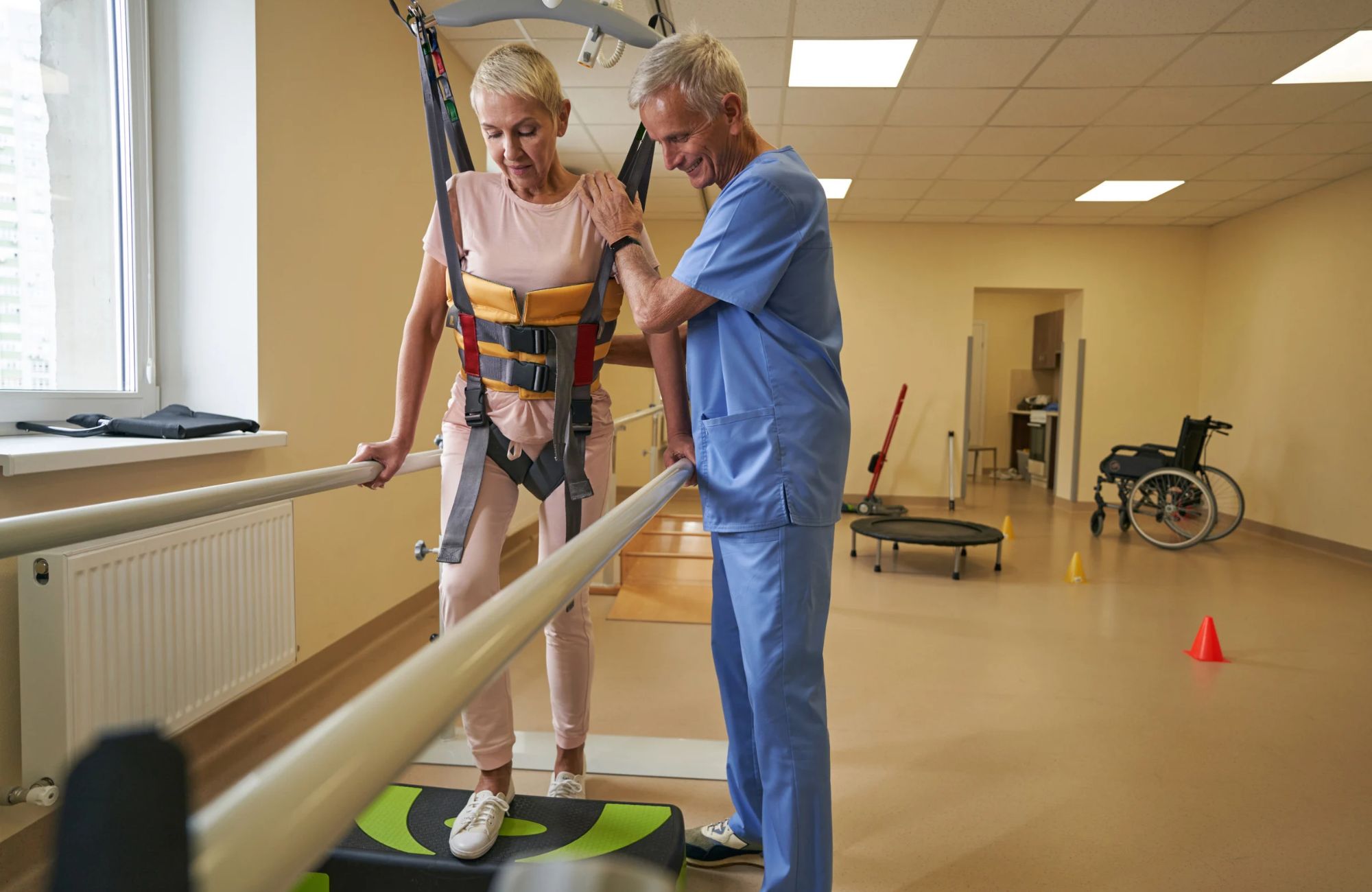
Therapy staffing in NYC helps healthcare and educational facilities recruit physical therapists, occupational therapists, speech-language pathologists, and other qualified therapy professionals for temporary and permanent workforce needs. Depending on the position, healthcare employers may use contract, temporary, temp-to-hire, or direct-hire staffing to address different workforce needs.
In these arrangements, a staffing agency supports the recruitment and placement process while the facility remains responsible for its hiring and operational decisions. Flagstar Rehab serves in that staffing and recruiting role by connecting healthcare organizations with qualified professionals. It does not operate a clinic or provide patient care; licensed clinicians deliver care within the facilities where they work.
That division of responsibility makes the facility’s role especially important at the start of the search. Before recruitment begins, employers need to define the position clearly enough for a staffing partner to understand the type of professional needed, the work setting, the schedule, the staffing model, and the qualifications that matter for the role.
How Does Therapy Staffing in NYC Work for Facilities?
A therapy staffing agency helps healthcare employers recruit professionals for specific workforce needs. The facility defines the role and requirements, while the staffing agency supports sourcing, recruitment, matching, and placement.
Who Handles What?
The staffing agency focuses on recruitment. The facility makes hiring and operational decisions. Licensed physical therapists, occupational therapists, speech-language pathologists, and other therapy professionals perform the clinical duties associated with their roles.
How Therapy Staffing Fits Within Healthcare Staffing
Therapy staffing is part of the broader healthcare staffing and allied health sector. A general medical staffing agency may recruit nurses, nurse practitioners, social workers, and non-clinical professionals, while therapy-focused recruitment centers on therapists and therapy assistants.
Staffing Models Depend on the Vacancy
Facilities may use temporary, contract, temp-to-perm, or direct-hire placement depending on the role and expected duration. A hospital covering a short-term schedule gap, for example, may need a different approach than a rehabilitation center hiring for a permanent position.
Define the PT, OT, or SLP Opening Before Recruiting
A facility can make recruitment more focused by defining the opening before candidate sourcing begins. Clear requirements help recruiters and employers evaluate licensed professionals against the same criteria.
Before starting a search, identify:
- Therapy discipline: physical therapist, occupational therapist, or speech-language pathologist
- Work setting: hospital, rehabilitation center, long-term care facility, outpatient clinic, private practice, school, or another applicable setting
- Schedule: days, hours, shifts, or coverage requirements
- Staffing model: temporary, contract, temp-to-hire, or permanent placement
- Start need: when the facility would like the selected professional to begin
- Experience requirements: experience genuinely needed for the position
- Clinical setting: whether the job involves acute care, long-term care, outpatient practice, education, or another environment
- Credentials: applicable licenses, certifications, or setting-specific credentials
- Facility requirements: onboarding documents or other position-specific requirements
- Selection process: interviews, approvals, and the final hiring decision
It also helps to separate true requirements from preferences. A facility looking for experienced professionals may have good reasons for requiring prior work in a specific setting. But treating every preferred skill as mandatory can reduce the pool of otherwise qualified professionals.
Facility Role-Definition Checklist
Before contacting a staffing partner, a healthcare employer should be able to describe:
Role → Setting → Schedule → Staffing model → Start need → Required experience → Applicable credentials → Facility requirements → Selection process
These factors can also affect the time needed to move from recruitment to placement. Flagstar Rehab’s related guide explains factors that affect therapist vacancy timelines, including role requirements, interviews, credential steps, and onboarding.
Which Therapy Staffing Model Fits the Vacancy?
Temporary staffing, contract staffing, temp-to-hire arrangements, and direct hire address different workforce needs. Healthcare organizations should compare them based on the expected length of the position and their long-term hiring goal.
The American Staffing Association distinguishes temporary staffing, temporary-to-hire, contract help, and direct placement according to the workforce relationship each model is designed to support. Review staffing-service definitions from the American Staffing Association.
| Facility need | Staffing model to consider | Main decision factor |
| Defined short-term coverage | Temporary staffing | Expected duration |
| Coverage for an assignment period | Contract staffing | Schedule and assignment length |
| Temporary need that may become permanent | Temp-to-hire | Long-term hiring goal |
| Permanent vacancy | Direct hire | Ongoing workforce need |
For example, a long-term care facility that needs coverage during a temporary leave may consider temporary or contract staffing. A rehabilitation center with an ongoing vacancy may be better suited to a direct-hire search. A facility that wants to evaluate long-term fit before making a permanent decision may consider a temp-to-hire arrangement, depending on the agreement terms.
Temporary or Contract Staffing
Temporary or contract staffing may fit when a facility has a defined coverage need, a schedule gap, or a need for additional therapy professionals for a specific period.
For example, hospitals, outpatient clinics, rehabilitation centers, and long-term care facilities may have different staffing needs based on schedules, vacancies, and service demand.
The employment structure, assignment duration, payroll responsibilities, schedule, and commercial terms depend on the staffing agreement. Facilities should confirm those details rather than assume all temporary positions work the same way.
Temp-to-Hire Staffing
Temp-to-hire may fit when a position begins as a temporary arrangement but may later transition into permanent employment.
This can give healthcare organizations another staffing option when the long-term goal is permanent hiring. However, a possible transition should never be treated as a guaranteed permanent placement.
Facilities should understand the decision process and conversion terms before choosing this model.
Direct-Hire Placement
Direct-hire recruitment focuses on positions intended to become permanent roles within the hiring organization.
The recruitment agency helps identify possible candidates, while the facility evaluates candidates and makes the hiring decision. Fees, guarantees, employment terms, and other Flagstar-specific conditions should be confirmed for the individual engagement.
Flagstar Rehab currently describes temporary, contract, temp-to-perm, and direct placement as part of its staffing services. Facilities comparing permanent placements with contract options can also review direct hire versus contract staffing.
PT, OT, and SLP Hiring Requirements Are Not Identical
Physical therapists, occupational therapists, and speech-language pathologists hold vital roles across the healthcare industry, but they are separate regulated professions. Healthcare employers should therefore verify qualifications by profession and work setting rather than use one generic therapist checklist.
This section concerns hiring and professional eligibility, not treatment. Licensed or otherwise appropriately authorized clinicians provide care to patients within their professional roles. Flagstar Rehab recruits or places those professionals, while the healthcare organization oversees patient care and service delivery according to its policies and applicable professional standards.
Physical Therapist Hiring Requirements
New York State requires licensure for use of the titles Physical Therapist and Physical Therapist Assistant. The New York State Education Department’s Office of the Professions sets the requirements for applicants seeking New York authorization, including professionals licensed in other jurisdictions. Check current New York physical therapy licensing requirements.
For a physical therapy staffing need, the facility should identify the applicable license requirement along with the experience, skills, schedule, and setting requirements that genuinely matter to the job.
A hospital seeking someone with acute care experience, for example, may have different role requirements than a private practice or outpatient clinic. Those differences should come from the position itself rather than from generic assumptions about all physical therapists.
Occupational Therapist Hiring Requirements
New York also requires licensure for use of the Occupational Therapist and Occupational Therapy Assistant titles. NYSED separately establishes education, examination, experience, and other applicable requirements for occupational therapy licensure. Check current New York occupational therapy licensing requirements.
For hiring purposes, facilities should verify the candidate’s applicable professional authorization and then evaluate the experience and skills that matter to the specific OT position.
Occupational therapists may work across hospitals, rehabilitation centers, long-term care facilities, outpatient clinics, schools, and other settings. The facility should define what experience is relevant to its own role instead of treating every OT position as interchangeable.
Speech-Language Pathologist Hiring Requirements
Speech-language pathologist hiring requires particular attention to work setting.
NYSED states that use of the Speech-Language Pathologist title generally requires licensure in New York but identifies certain exempt settings, including public and nonpublic schools, colleges and universities, and government settings. NYSED also states that teacher certification is the appropriate credential for providing speech services in New York public schools. Check current New York speech-language pathology licensing requirements.
That means healthcare employers and educational organizations should not assume that all speech-language pathologist positions follow the same credential pathway.
| Discipline | Main area to verify | Setting question |
| PT | Applicable New York professional authorization | What facility-specific requirements apply? |
| OT | Applicable New York professional authorization | What facility-specific requirements apply? |
| SLP | Applicable professional license and/or setting credential | Is the role in healthcare, education, government, or another setting? |
Because licensing rules can change, employers should verify current New York requirements for the specific profession and work setting.
What Does the Therapy Staffing Process Look Like?
The staffing process generally moves from defining a vacancy to sourcing qualified professionals, evaluating job fit, completing applicable pre-start requirements, and coordinating the clinician’s start.
Responsibility changes at each stage.
- The facility defines the job. The employer identifies the discipline, setting, schedule, duration, skills, qualifications, and other material requirements.
- Professional and facility requirements are identified. The facility separates legal requirements, facility requirements, preferred experience, and flexible criteria.
- The staffing model is selected. The organization decides whether the need is temporary, contract-based, temp-to-hire, or permanent.
- Potential candidates are sourced. A staffing or recruitment agency searches for healthcare professionals whose qualifications may match the role.
- Qualifications and job fit are reviewed. Relevant experience, credentials, schedule, and other position requirements are compared with the opening.
- The facility interviews and selects. Candidate sourcing does not replace the facility’s hiring decision.
- Applicable pre-start requirements are completed. Licensing, credentialing, screening, onboarding, and administrative responsibilities depend on the job and staffing arrangement.
- The start is coordinated. The responsible parties confirm the applicable start arrangements.
Who Is Responsible for Each Part?
| Stage | Primary responsibility |
| Define staffing needs | Facility |
| Source potential candidates | Staffing/recruiting agency |
| Present and consider potential matches | Agency and facility |
| Interview and select | Facility |
| Hold required professional credentials | Clinician |
| Complete licensing, credentialing, or screening steps | Depends on the requirement and staffing arrangement |
| Complete facility-specific onboarding | Facility or another responsible party under the agreement |
| Perform professional and clinical duties | Clinician at the facility |
This separation helps facilities understand what a staffing agency supports, what the employer still controls, and what the clinician is professionally responsible for performing.
Flagstar Rehab provides recruitment and placement support. It does not become the therapy team delivering clinical services simply because it helps staff the position.
What Should Healthcare Employers Ask Before Choosing a Therapy Staffing Partner?
Healthcare employers should evaluate a staffing agency based on its ability to support the actual role, not broad claims about quality, expertise, or speed.
Useful questions include:
- Does the agency recruit the type of therapist we need?
- Does it support our preferred staffing model?
- Does it recruit for our part of NYC or the surrounding New York market?
- Does it have experience working with our type of healthcare organization?
- What information does the agency use to evaluate candidate fit?
- Which screening or credential-verification services does it perform?
- Which steps remain the employer’s responsibility?
- How are interviews and selection decisions coordinated?
- What contract or conversion terms apply?
- If a timeline is quoted, does it refer to candidate sourcing, candidate presentation, selection, or actual start?
The last point matters because “timely” can refer to different milestones, such as candidate sourcing, candidate presentation, facility selection, onboarding, or the clinician’s actual start date.
Finding qualified professionals is only one part of the hiring process. Interviews, professional verification, facility approvals, onboarding, schedule coordination, and employee start dates may follow.
Facilities deciding whether recruitment services are appropriate can also review the signs a facility may need a therapy staffing partner.
Therapy Staffing in NYC Is Different From Broader Medical Staffing
Therapy staffing is part of healthcare staffing, but it focuses on a narrower group of professionals.
Broader Medical Staffing Covers More Roles
A medical staffing agency may recruit across nursing, allied health, advanced practice, administrative, and non-clinical roles. That can include nurses, nurse practitioners, social workers, and other healthcare professionals.
Therapy Staffing Focuses on Therapy Roles
Therapy staffing centers on professionals such as physical therapists, occupational therapists, speech-language pathologists, PTAs, and COTAs.
For healthcare organizations, that narrower focus can make it easier to align recruitment with the actual requirements of a therapy vacancy instead of treating it as a general medical staffing need.
How Flagstar Rehab Supports Facility Therapy Staffing
Flagstar Rehab is a therapy staffing and recruiting agency that connects healthcare and educational organizations with therapy professionals.
We help healthcare and educational facilities recruit and place qualified therapy professionals, including PTs, OTs, SLPs, RTs, PTAs, and COTAs.
Depending on the role, we can support temporary, contract, temp-to-perm, and direct-hire staffing needs. We focus on matching the position, setting, schedule, and qualifications with the right staffing approach.
A facility can start by sharing the therapy discipline, work setting, schedule, staffing model, start date, required credentials, and any facility-specific onboarding requirements. Those details help determine whether the search should focus on temporary coverage, contract support, temp-to-hire, or direct placement.
We handle the staffing and recruitment side of the process. The facility makes its hiring and operational decisions, while licensed clinicians provide the care.
Conclusion
Effective therapy staffing in NYC starts with a clearly defined opening. Healthcare employers should identify the discipline, work setting, schedule, staffing model, required skills, material qualifications, and applicable credentials before candidate sourcing begins. They should also verify PT, OT, and SLP requirements separately because New York rules can differ by profession and setting.
Flagstar Rehab is a therapy staffing and recruiting agency that helps connect facilities with qualified therapy professionals. A healthcare or educational facility with an open role can contact Flagstar Rehab about therapy staffing support to discuss the position, schedule, staffing model, and requirements.
FAQs
Does a staffing agency always employ the therapist it recruits?
No. The employment relationship depends on the staffing model and written agreement. Temporary, contract, temp-to-hire, and direct-hire arrangements can assign payroll, employment, and administrative responsibilities differently, so employers should confirm the structure for each engagement.
Does being licensed in another state automatically authorize a therapist to work in New York?
Not necessarily. New York maintains profession-specific licensing and authorization requirements. Healthcare employers should check current NYSED requirements for the relevant profession rather than assume an out-of-state credential is sufficient.
Is candidate sourcing the same as credential verification?
No. Candidate sourcing identifies professionals who may fit a position. Credential verification concerns whether required licenses, certifications, or other qualifications can be confirmed. The staffing agreement should clarify which verification tasks belong to the agency, facility, clinician, or another responsible party.
Does an NYC facility still need to check New York State requirements?
Yes. NYC healthcare organizations operate within New York State, so applicable state professional requirements still matter. Facility-specific requirements may add another layer, and some educational or government settings can involve different credential rules for certain professionals, including speech-language pathologists.